
Trauma doesn't erase your right to pleasure
Let's be real. Trauma lives in the body. It can freeze arousal, make touch feel dangerous, or create a distance between what you want to feel and what you actually can feel. Many survivors describe it as being locked out of their own sexuality. The nervous system learned to protect by shutting down. That's not weakness. That's survival.
The good news: you can retrain that system. Not by forcing yourself back into sex, but by slowly, intentionally rebuilding a sense of safety in your own body. Clitoral vibrators like those from Lemons Massager, particularly the Lemon Clitoral Vibrator, can be powerful tools in that process because they put you entirely in control.
Why clitoral vibrators work differently in trauma recovery
Here's what makes lemon vibrators and other clitoral massagers distinct when you're healing. Traditional penetration can feel triggering because it mimics the loss of control. Clitoral stimulation is entirely different. You control the pressure, the speed, the moment it stops. There's no penetration, no surprise, no relinquishing of power.
Vibration itself has a nervous-system benefit. Rhythmic sensation can help shift your body out of a frozen or hypervigilant state into something closer to activation. The right kind of activation. The kind you choose.
The suction-based design of a Lem vibrator is especially useful because it distributes sensation across a wider area rather than concentrating pressure on a single point. This can feel less intense, more diffuse, more controllable. You're not forcing anything. You're inviting.
Starting with safety first
Before you even think about using any toy, establish these non-negotiables.
Privacy is the first boundary. If you're not alone or don't feel genuinely safe, stop. Privacy isn't luxury. It's foundation. Your nervous system needs to know nothing will interrupt you.
Time without a goal is next. Don't go into this expecting an orgasm. That's not the work. The work is reconnecting with sensation without fear. Some sessions might feel like nothing. That's okay. You're retraining your body to notice pleasure-adjacent feelings. Tingles. Warmth. Ease. These count.
Know your baseline before you start. Spend 5-10 minutes alone just noticing your body. What feels tense? Where do you feel safe? What areas feel numb? This map helps you know what's shifting over time.
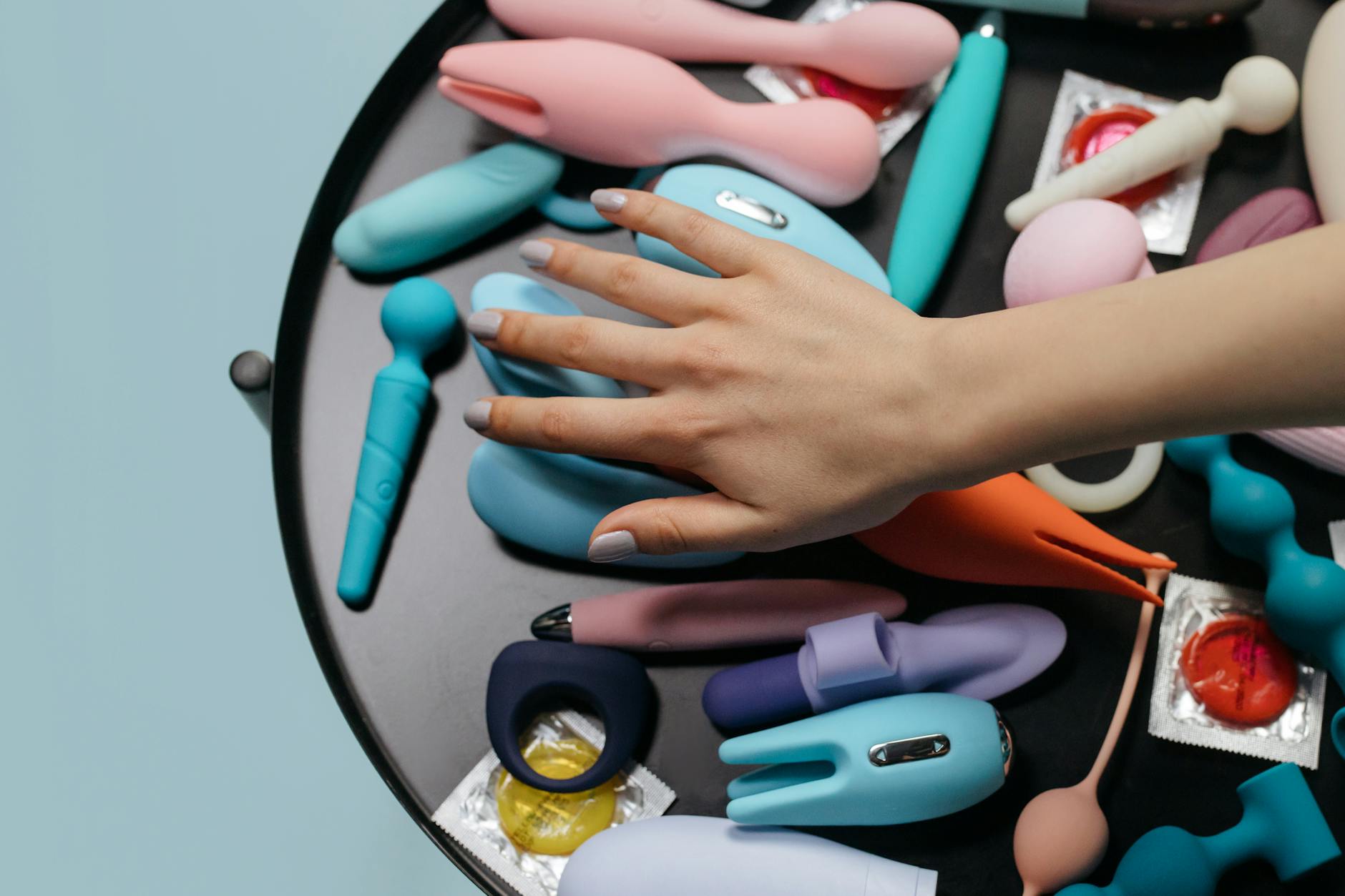
Photo by cottonbro studio on Pexels
The first session protocol
I recommend this structure for early sessions with lemon adult toys or any clitoral vibrator when you're in recovery.
Start with the toy off. Just hold it. Get familiar with its weight, texture, temperature. Let your hand get used to it without any expectation. Five minutes. That's enough.
Then, turn it on at the lowest setting, somewhere on your body that feels less emotionally loaded. Your forearm. Your inner wrist. Your shoulder. Feel the vibration without it meaning anything. Let your nervous system register: this is safe stimulation, completely under my control, and I can stop it instantly.
Once that feels ordinary, try the lowest setting against your outer labia. Not penetration. Not intense sensation. Just gentle contact. If it feels good, keep going. If something feels off, stop. Notice the difference. Both are data.
Many of my clients report that the first time they intentionally use a lemon clitoral vibrator in this structured way, they feel less pleasure and more relief. Relief that their body still responds. Relief that they can control it. That's the real win.
Working with triggers and flashbacks
Here's what I tell people: your job is not to power through a flashback. Your job is to notice it, pause, and reconnect to the present moment.
If a memory or sensation of unsafety arrives while you're using your vibrator, stop immediately. There is no prize for pushing through. Rewiring happens through safety, not through forcing yourself past discomfort.
When a trigger appears, put the toy down and ground yourself using your senses. Name five things you can see. Four you can touch. Three you can hear. Two you can smell. One you can taste. This pulls your nervous system out of the past and back to now. This is your body. Now. Safe.
Once you feel settled, you can try again, or you can be done for the day. Both are healing.
Expanding sensation over weeks
Trauma recovery is not linear. Some weeks you'll use your lemon vibrator three times and feel incredible. Other weeks you might not want to touch it. Both are normal. Trust your body's pace.
However, when you do feel ready to expand, here's the progression I see work best.
Weeks 1-2: Lowest setting, outer labia, 5-10 minute sessions, no expectation of orgasm. The goal is safety and familiarity.
Weeks 3-4: Same location, but experiment with pausing and resuming. Feel how your body responds to stopping and starting. This rebuilds your sense of control.
Weeks 5-6: Try a slightly higher setting if you want to. Pay attention to what pattern feels good. Move the vibrator slightly to find your preferred angle. You're mapping pleasure, not pursuing it.
Weeks 7+: If you're feeling ready, try pattern 2 or 3 on your Lemon Clitoral Vibrator. Extend sessions to 15-20 minutes if that feels good. Notice when arousal starts building without you forcing it.
This isn't a rigid timeline. You might spend three months in week one's work and that's exactly right.
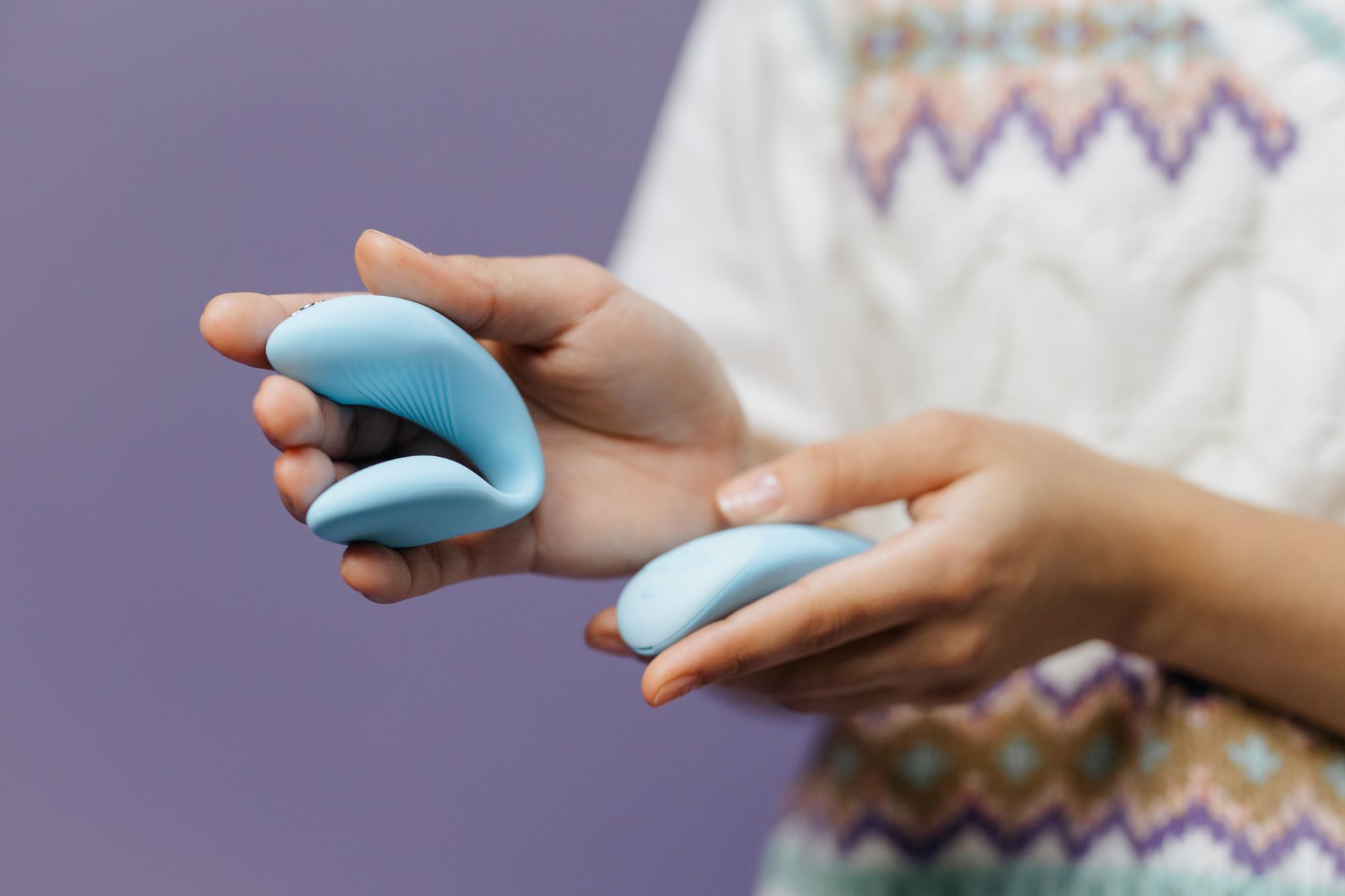
Photo by cottonbro studio on Pexels
When to add a partner back in
This is delicate. If you're partnered and healing from trauma, talking to your partner about this process is crucial, but it's separate from doing it together.
I recommend at least 8-10 weeks of solo exploration before involving a partner. That's enough time for your body to start rebuilding a basic sense of safety and pleasure independence. Then, when you do bring a partner in, the frame is different. You're not trying to perform. You're showing them what you've learned about your own body.
Some partners want to watch. Some want to participate. Some want to just sit nearby while you use your vibrator. There's no right answer. What matters is that you decide what happens, and your partner respects it completely.
If your partner pressures you to move faster, combine recovery with penetration, or treats your trauma recovery like it's about them, that's a sign you need support beyond toy use. Consider working with a trauma-informed sex therapist.
Practical tips for solo sessions
A few small things that make a difference.
Use water-based lubricant even if you don't think you need it. Trauma can reduce natural lubrication. Lube makes everything feel less forced and more intentional.
If the suction-style sensation feels too intense, try using your vibrator over underwear or a thin fabric at first. It mutes the sensation without eliminating it.
Keep a soft blanket or pillow nearby. Wrapping yourself can increase your sense of safety and containment during the session.
Set a timer for 15-20 minutes. This prevents the weird anxiety of wondering how long you've been doing this. When the timer goes off, you're done.
Charging your Lem vibrator or whichever lemon sexual toy you're using should become a small ritual. Charge it, know it's ready for you. This removes the friction of low batteries interrupting a session.
FAQ: Healing and clitoral vibrators
Q: Is it normal to feel nothing the first few times?
A: Completely normal. Trauma can numb sensation as a protection. You're slowly waking up your nervous system. Some people describe the first 3-5 sessions as feeling like they're waiting for something to happen. That's the right experience. You're rebuilding connection at the pace your body can handle.
Q: What if I experience an orgasm and it feels scary?
A: Orgasms after trauma can bring up unexpected emotions. You might feel vulnerable, exposed, or suddenly flooded with emotion. This is your nervous system releasing. It's not dangerous. If it happens, pause, breathe, and remind yourself where you are and that you're safe. Some people find it helpful to cry. Others need to just sit quietly. Both are healing.
Q: Can I use lemon vibrators if I'm also in talk therapy?
A: Yes, and I'd actually recommend mentioning it to your therapist. Not for permission, but for accountability and processing. Sometimes sessions with your vibrator will bring up material worth discussing with your therapist. The two support each other.
Q: How do I know when I'm ready to try penetration again?
A: The marker is usually when you can use a clitoral vibrator for 10-15 minutes without your body tensing in anticipation of something bad happening. When pleasure feels possible without you bracing. That's when your nervous system is starting to trust again. Even then, go slow.
Q: What if my trauma is related to a specific partner, and I'm still with them?
A: This is complex and deserves professional support. Solo exploration with your Lemon Clitoral Vibrator is still valuable because it helps you reconnect to your own pleasure separate from relational dynamics. But rebuilding intimacy with the person who caused harm requires couples therapy and often specialized trauma work. Don't try to do this alone.
Q: Is there a vibrator setting that's better for trauma recovery?
A: Lower settings are generally better for early recovery because they feel less overwhelming. The suction-based design of lemon vibrators makes them gentler overall compared to traditional vibrators. Start at pattern 1 and increase only if you want to after several weeks of familiarity.
The long view
Recovery isn't about forcing yourself back to where you were before. It's about building something new. A relationship with your body that's grounded in choice, safety, and your own definition of pleasure.
Clitoral vibrators, particularly the intentional design of lemon sexual toys, give you a tool for that rebuilding. They're not magic. They're instruments you control completely. That control is the healing part.
Your trauma is real. Your recovery is also real. And your right to pleasure, on your timeline and your terms, is one of the most powerful reclamations you can make. If you have questions about your recovery or want to explore further, reach out to our support team. You deserve care, including from yourself.
Related reading
If you're working on rebuilding pleasure more broadly, explore how to use lemon vibrators when easing back into intimacy after surgery and how to use lemon vibrators when performance anxiety blocks pleasure. Both cover similar nervous-system work in different contexts.